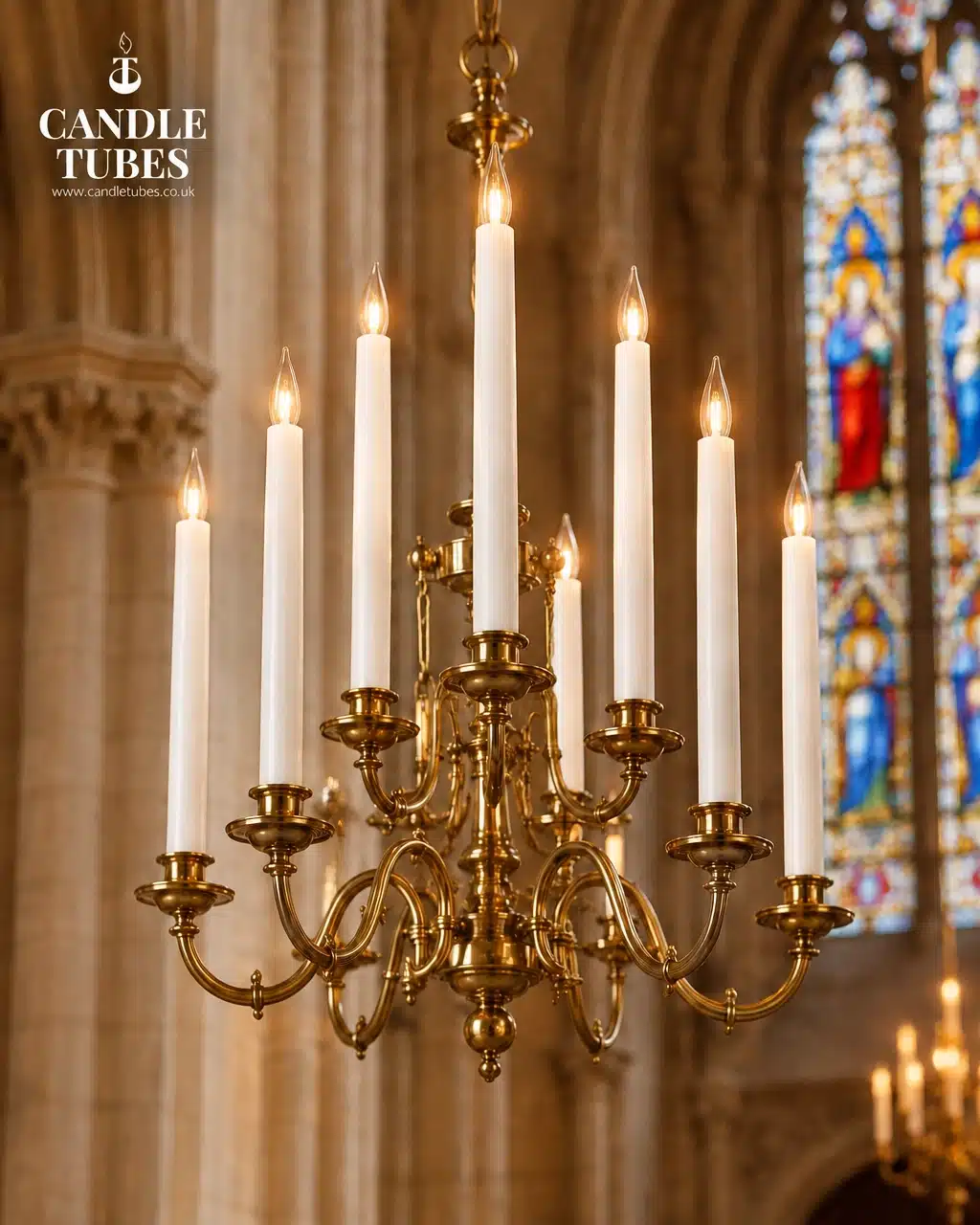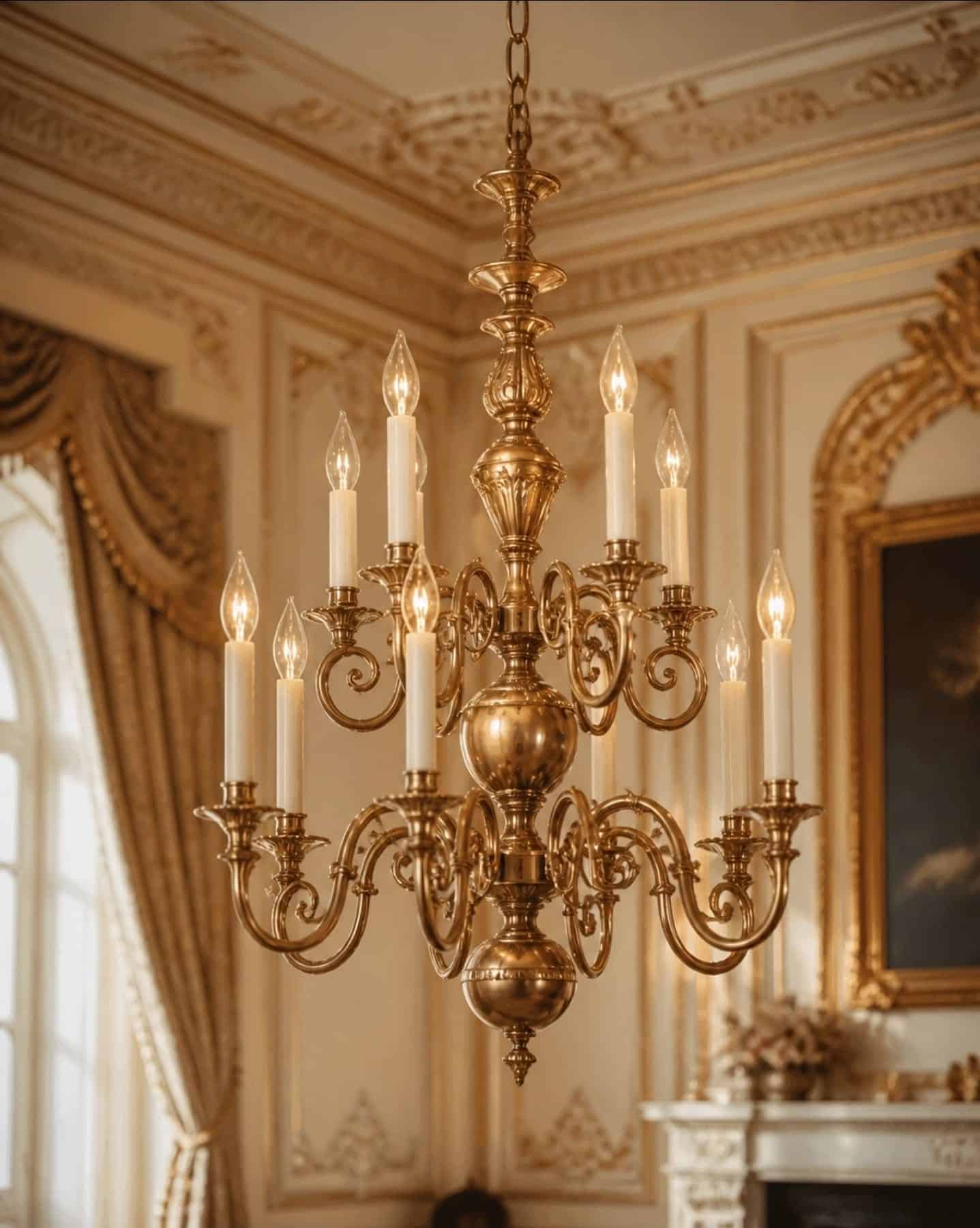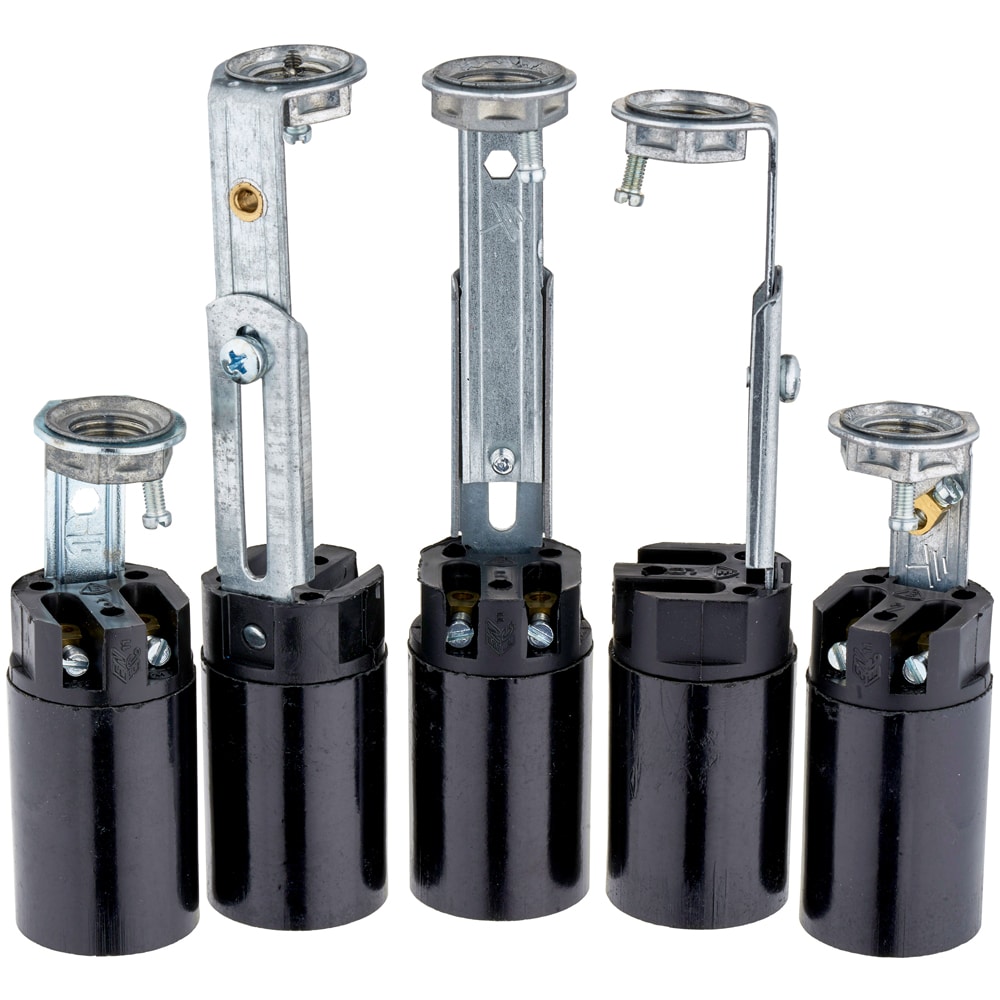
Choosing an E14 lampholder is not simply a matter of selecting the first SES fitting that looks approximately right. A difference of just 1mm can affect the way a component sits inside a candle tube, candle sleeve or chandelier candle cover.
For lighting manufacturers, restorers, interior designers and careful homeowners, the important details are the diameter, height, mounting arrangement, earthing provision and internal clearance. In this guide, we compare the established 23.5mm E14 range with the new 22.5mm fixed and adjustable ranges from Sonny, available through Candle Tubes UK.
Both are E14 / SES (Small Edison Screw) lampholder options. However, they should not be treated as automatically interchangeable. Your prudent starting point is always to measure the original fitting and confirm the complete assembly before ordering.
What does E14 / SES mean?
E14 refers to the bulb cap size: an Edison Screw with a 14mm base. SES means Small Edison Screw, which is the common description used for this fitting in the UK and many international markets.
E14 / SES lampholders are frequently found in:
- Chandeliers and candelabra-style fittings
- Wall lights and decorative lamps
- Period lighting restorations
- Bespoke candle tube and candle sleeve assemblies
- Lighting projects using flame-tipped decorative bulbs
The lampholder provides the electrical connection for a compatible E14 bulb. The decorative component: such as a card candle tube, glass sleeve or chandelier candle cover: then sits around or over the visible assembly, depending on the design.
For a traditional appearance, an E14 / SES flame-tipped bulb can be paired with a suitable decorative candle tube. The bulb, lampholder, tube and fitting must all be considered together rather than as isolated parts.

What is the difference between a 23.5mm and 22.5mm E14 lampholder?
The principal difference is the body diameter:
| Feature | 23.5mm E14 range | New 22.5mm E14 range |
|---|---|---|
| Lampholder diameter | 23.5mm | 22.5mm |
| Bulb fitting | E14 / SES | E14 / SES |
| Fixed heights | Confirm against the selected component and project | 65mm, 85mm and 100mm |
| Adjustable options | Configuration must be confirmed | 80–100mm and 100–120mm |
| Fixed or adjustable | Confirm the required configuration | Fixed and adjustable options |
| Earthing terminal | Confirm for the selected version | Available where supported by the configuration |
| Colour options | Confirm finish and colour | Black and white options where supported |
| Candle tube clearance | Measure the tube’s internal diameter | Check the tube’s internal diameter against the selected component |
| Best selection method | Match the original component | Match the original component and required finished height |
The difference between 23.5mm and 22.5mm may appear modest, but a component needs enough clearance to fit properly without being loose, forced into position or liable to damage the inner surface of a decorative tube.
At the same time, clearance must not be assessed by diameter alone. The bracket, terminals, mounting thread and any shoulder or internal detail can also influence the final fit.
When is the 23.5mm E14 range the right choice?
The 23.5mm range is an established option for projects where the original component, candle tube or restoration design calls for that dimension.
It may be suitable when:
- Your original lampholder measures 23.5mm across the relevant body
- The existing candle tube has been designed around that size
- You are matching a previous installation or a known restoration specification
- The required height and mounting arrangement have already been confirmed
- You need continuity with an existing production run
We do not recommend assuming that every 23.5mm lampholder has the same height, finish or configuration. Those details should be checked against your particular project requirements.
For example, two components may both accept E14 bulbs but differ in:
- Overall or usable height
- Mounting arrangement
- Bracket style
- Earthing provision
- Terminal position
- Finish or colour
- Clearance inside the decorative candle component
Our E14 white lampholder listing provides a useful example of the 23.5mm category. For a production or restoration order, however, always confirm the exact component and dimensions required.
What are the new 22.5mm fixed E14 options?
The new 22.5mm fixed range from Sonny is designed for projects where a slimmer body and a predetermined height are preferred.
The available fixed heights are:
- 65mm
- 85mm
- 100mm
A fixed-height lampholder can be a sensible choice when you are producing multiple identical fittings or restoring a chandelier where the original finished proportions are already known. It removes the need to set each bracket individually, which can be helpful in repeat manufacturing and batch restoration work.
Select the fixed height by considering the complete visible assembly: not merely the distance from the mounting point to the top of the lampholder.
Your reckoner should include:
- The height of the lampholder and bracket
- The position of the E14 bulb
- The internal length of the candle tube or sleeve
- The amount of lampholder that must remain accessible
- The finished height required across all arms of the chandelier
- Any decorative shoulder, collar or cover
A 65mm option may suit a more compact design, while an 85mm or 100mm option may be preferable where more height is required. These are selection principles rather than universal rules: the original component remains the final authority.
Why choose a 22.5mm adjustable E14 lampholder?
The new 22.5mm adjustable range offers two specified height configurations:
- 80–100mm adjustable
- 100–120mm adjustable
Adjustment can be particularly useful when restoring older fittings, because original arms and brackets are not always perfectly identical. It can also help when the final height of a candle sleeve or chandelier candle cover needs careful alignment.
An adjustable design may be advantageous when:
- The original measurement is difficult to establish
- The decorative tube has a precise seating position
- You need to align several chandelier arms consistently
- The visible bulb position must be refined during assembly
- A fixed size falls between the required finished dimensions
The adjustment should be secured correctly once the desired position has been established. Do not rely on friction alone, and do not make alterations to electrical connections unless the work is being carried out by someone suitably qualified.
The 22.5mm adjustable 80–100mm E14 set includes an adjustable metal leg bracket and screw-in wire terminals. The page also identifies an earthing arrangement for the metal bracket. Colour and earthing availability can vary by product configuration, so confirm the precise version: particularly when ordering black or white options.

How do candle tubes and decorative sleeves affect the choice?
A decorative candle tube must have sufficient internal clearance to pass over or sit around the compatible lampholder assembly. This is where an apparently small dimensional difference becomes important.
Before ordering, measure:
- The outside diameter of the original lampholder body.
- The internal diameter of the candle tube or sleeve.
- Any internal lip, shoulder or narrowing in the tube.
- The required finished height from the fitting to the bulb.
- The position of the mounting thread and bracket.
- The space available for wiring and terminals.
Do not force a tube over a component that appears only slightly too large. That can cause a nasty pinch, mark the finish or damage a fragile card, glass, nylon or other decorative sleeve.
Candle Tubes UK manufactures bespoke, made-to-order candle tubes, candle sleeves and candle covers for restoration and new lighting designs. This means the decorative component can be considered alongside the selected E14 lampholder rather than treated as an afterthought.

Can E14 flame-tipped bulbs be dimmed?
Compatible E14 / SES flame-tipped bulbs can be used with suitable candle tube and lampholder assemblies. E14 dimmable flame-tipped bulbs may also be used only where the bulb, dimmer and complete circuit are compatible.
That compatibility should not be assumed. A qualified electrician should check:
- The existing wiring and fitting
- The bulb and dimmer combination
- The complete circuit
- Earthing requirements
- Secure mechanical assembly
- Safe clearance around the bulb and decorative materials
Always isolate the electrical supply before any inspection or component work. If you are unsure, stop and ask a qualified electrician. It is far better to spend a little time checking than to create an unsafe installation.
A separate point for restorers: our French GS Range should be paired with the E10 miniature SES Flame Tipped Bulb. E10 and E14 are different cap sizes, so do not substitute one for the other simply because both are screw fittings.
How should you select the correct E14 lampholder?
Use this checklist before placing an order:
- Diameter: Is the original component 23.5mm or 22.5mm?
- Height: Do you need a fixed 65mm, 85mm or 100mm option?
- Adjustment: Would 80–100mm or 100–120mm provide better control?
- Earthing terminal: Does the fitting require an earthed configuration?
- Colour: Is black, white or another finish required?
- Bulb fitting: Is the bulb definitely E14 / SES?
- Candle tube clearance: What is the tube’s internal diameter?
- Finished height: Where should the bulb sit once every component is assembled?
- Original component: Have you measured the original rather than relying on appearance?
- Electrical safety: Has a qualified electrician checked the complete circuit?
If any answer is uncertain, sending us the original component is often the most accurate route. Our digital measurement service allows customers to send an original part to Candle Tubes UK for assessment, helping us establish the relevant dimensions and create a suitable bespoke replacement.
23.5mm or 22.5mm: which should you choose?
Choose the 23.5mm range when it matches the original fitting, existing candle tube clearance or established project specification.
Choose the new 22.5mm range when your design requires its slimmer dimension, one of the fixed heights: 65mm, 85mm or 100mm: or the flexibility of an 80–100mm or 100–120mm adjustable configuration.
The most important point is not which size sounds newer or more convenient. It is whether the lampholder matches the original fitting and the complete decorative and electrical assembly.
For technical guidance, bespoke manufacturing and digital measurement support, contact Rachel’s office on 0330 113 7842.
You can also peruse our ranges at:
With the right measurements, selecting an E14 lampholder is not as complicated as it looks: and the correct choice can make the difference between a merely functional fitting and a beautifully balanced chandelier.