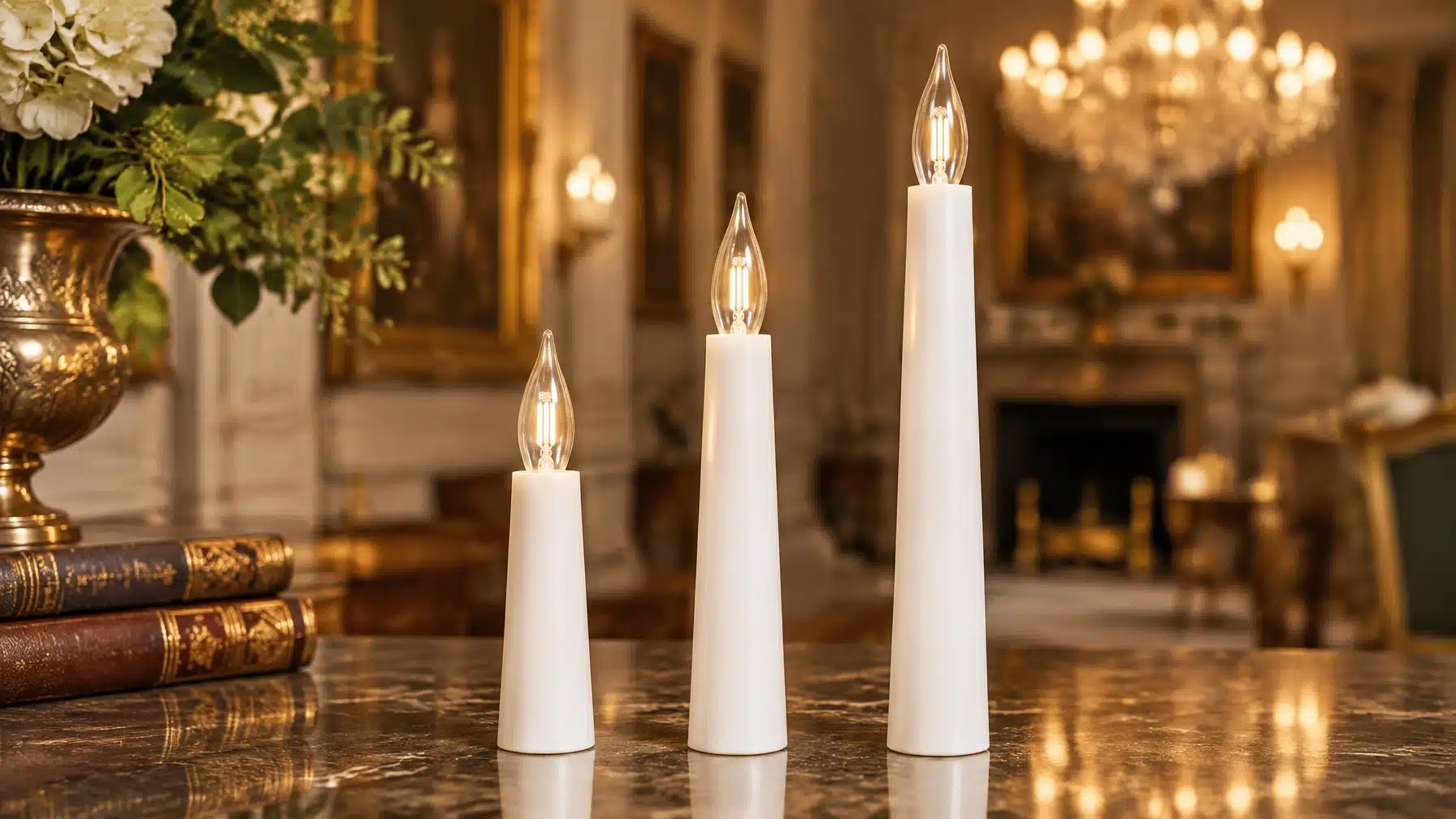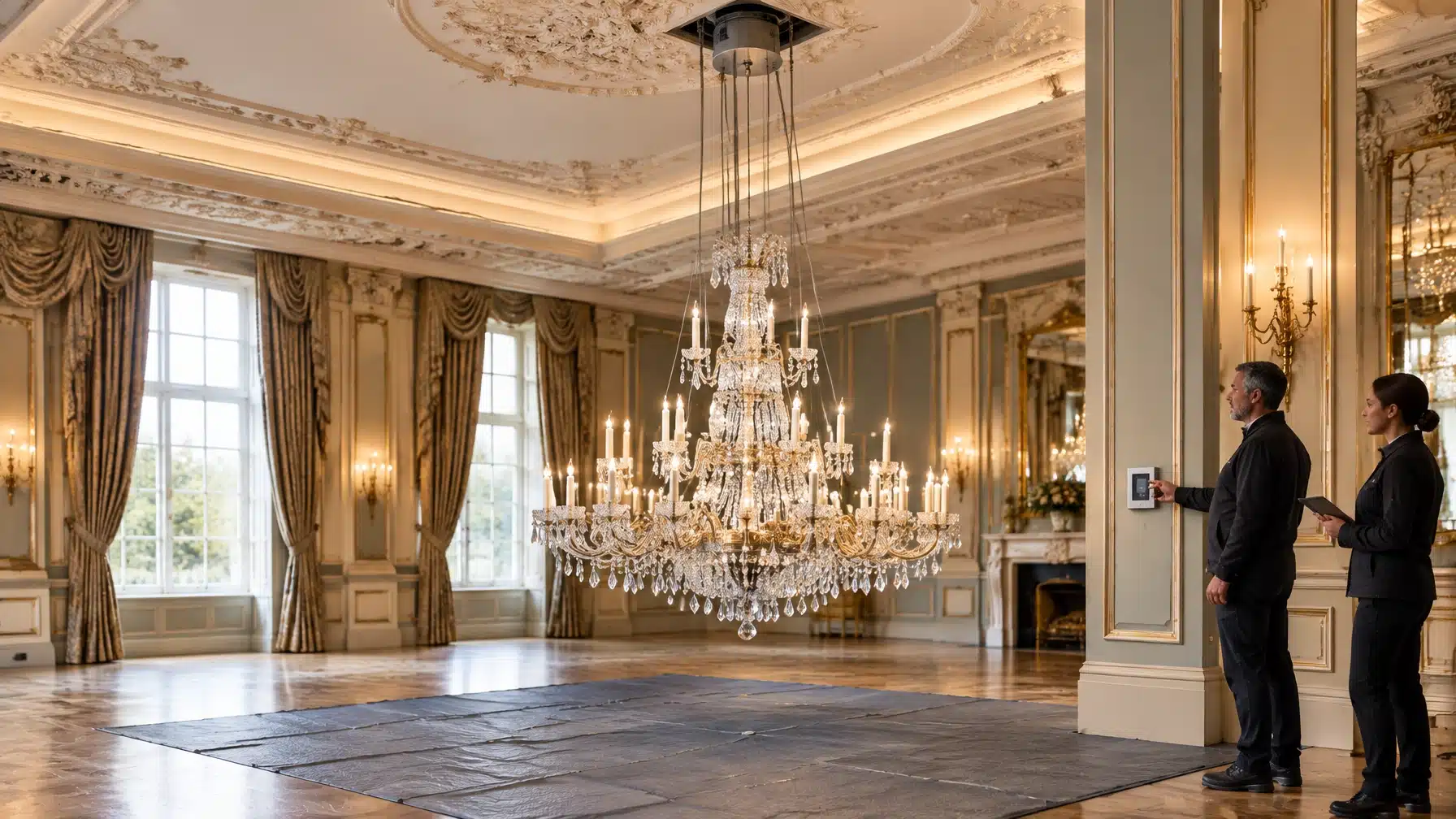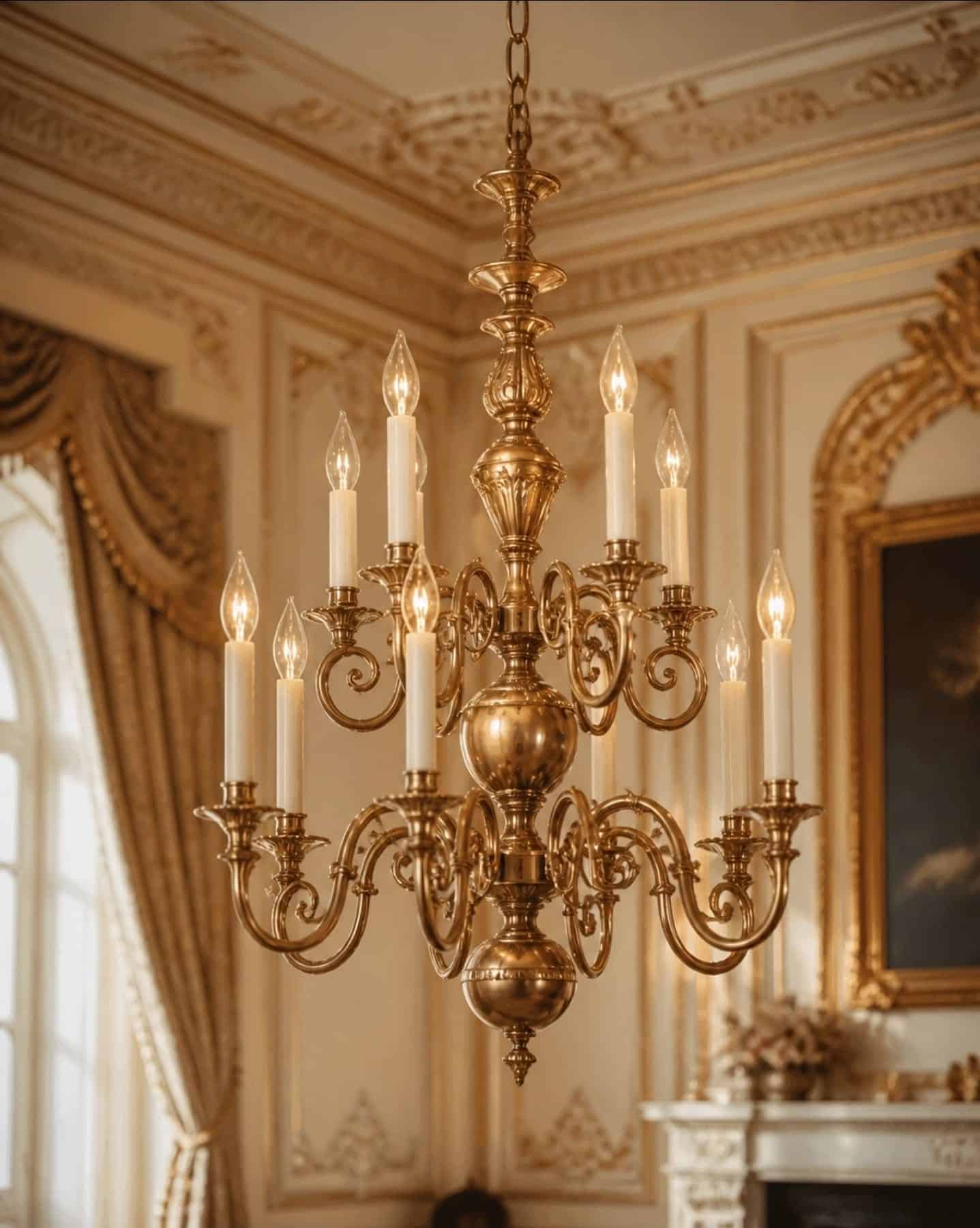
In a palace state room, cathedral chapel or church nave, the smallest details can make a considerable difference to the character of a historic fitting. Candle tubes (also known as candle sleeves or candle covers) should complement the arms and preserve their original proportions, not make delicate metalwork look visually crowded.
The French GS Range is designed around a slim, 22mm cylinder and an E10 fitting. It can be a considered choice for antique arms and period fixtures where a wider tube might appear heavy. As the UK’s leading manufacturer of bespoke candle tubes, we make components for both new designs and restoration replacements, helping specifiers and estates teams find a practical route from identification to a consistent finished installation.
Why consider French GS for a historic fitting?
A building may be grand; its lighting arms may still be fine and slender. That distinction matters. The tube’s diameter and silhouette are read alongside the arm, candle cup and surrounding ornament. On smaller antique fittings, the French GS 22mm cylinder can retain a lighter visual line than a wider profile.
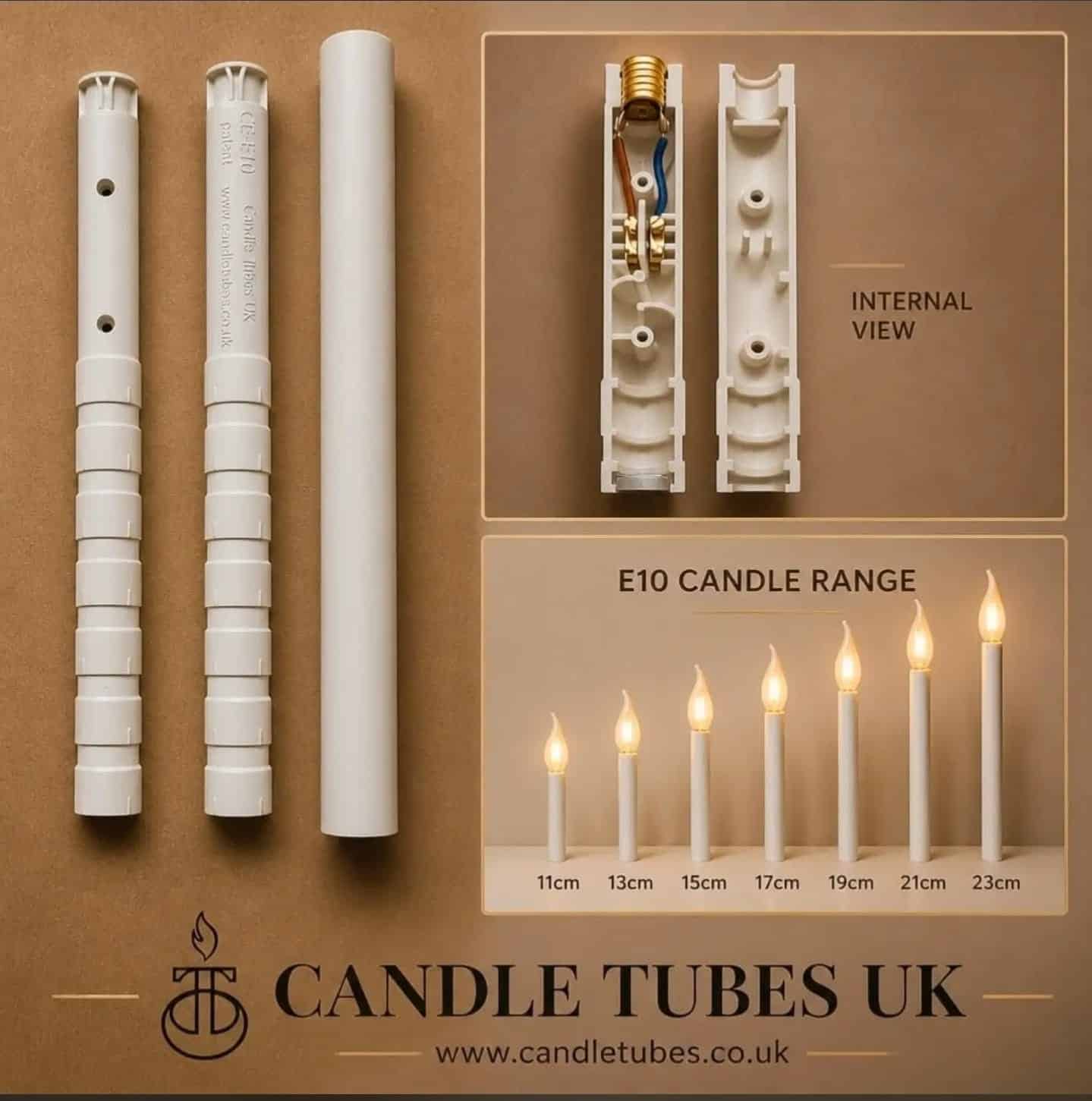
The E10 fitting is also an important part of the specification. E10 means MES (Miniature Edison Screw). It pairs with a miniature flame-tipped bulb, preserving the familiar candle-like appearance without making the bulb look oversized for a delicate fitting.
Our recommended pairing is the E10 miniature flame-tipped bulb. Dimmable E10 miniature flame-tipped bulbs can also work brilliantly with the range, provided the bulb, dimmer and circuit are compatible. Confirm compatibility for each installation with the relevant electrical professional.

How do you specify the right tube and fitting?
It is prudent to measure the fitting and confirm the electrical cap code before ordering. A tube can look right in a photograph yet prove unsuitable if its profile, height or connection does not match the original assembly.
For each fitting or consistent group, check:
- The arm and lampholder: record the available dimensions and identify the original fitting arrangement. Do not rely on a visual guess.
- The cap code: confirm that the existing lampholder accepts an E10 bulb. E10 (MES) and E14 are different fittings and are not interchangeable.
- The profile: note whether the original tube is straight or tapered, and whether it has a shoulder, rebate or other defining detail.
- The height: measure the finished tube as fitted and consider how much of the bulb should remain visible.
- The quantity and variation: check whether all arms appear identical. On older fittings, previous repairs may have introduced differences.
As a useful reckoner, a few millimetres can change how a slim arm reads against its candle tube. Measure a representative original carefully, then check other arms rather than assuming every position is identical (particularly on a fitting that has been repaired over many years).
Across our ranges, common finished heights include 11cm, 17cm and 23cm, with bespoke sizes available to order. French GS product options can include additional heights, so confirm the precise dimensions and version for your project when enquiring.
Can we match surviving originals across a large installation?
Yes. A restoration may involve a single replacement, or dozens of arms across a chandelier, wall lights or several rooms. Where possible, we recommend matching a surviving original rather than selecting a replacement by appearance alone.
Our digital measurement service helps us assess an original component accurately. You can post a sample to us for assessment, allowing us to review its dimensions and profile. This is especially useful where a fitting is discontinued, the original is unusual, or several components need to align consistently.
We specialise in bespoke, made-to-order components, and can discuss options for matching a discontinued profile. For projects where appearance is part of the brief, we also collaborate with a collective of specialist decorators and artists who can provide custom finishing services.

What should estates and facilities teams plan for?
For a multi-arm installation, consistency depends on a clear specification and a well-planned order. Before work begins, record the agreed profile, height, fitting type, finish and quantity. If the installation includes more than one fitting type, list each separately; this helps avoid mixing components that look similar but differ in a critical measurement.
It is also sensible to coordinate the order with planned maintenance and access arrangements. Consider:
- Whether the work can be grouped with a scheduled inspection or restoration.
- How many original samples are available for assessment.
- Whether the order is for one fitting, several rooms or a phased programme.
- When the components must be on site to meet the project schedule.
Lead times depend on the specification, material, finish and quantity. For larger or more complex requirements, contact Rachel’s office on 0330 113 7842 to discuss the details and timing.
Any inspection, removal or installation involving wiring, lampholders or electrical connections should be planned with a qualified electrician. Our candle tubes are decorative components; they do not replace electrical assessment or work by a competent professional.
When is English Regency the better proportion?
French GS is not automatically the right choice for every historic fitting. The arm and original design should guide the decision. Our English Regency Range has a larger, tapered profile with a 30mm base, making it a possible alternative for larger or more imposing arms where the slimmer French GS form would look undersized.
For example, an ornate state-room chandelier may call for the fuller English Regency base, while a delicate chapel fitting or antique arm may be better balanced by French GS. A nave can contain both kinds of fitting. The room’s scale is useful context, but the proportions of the individual fitting are the more reliable guide.
Compare the original component, or send it to us for assessment, before settling on a profile. You can also peruse our French GS range and English Regency Nylon Range for further details.
Frequently asked questions
What is the French GS Range?
It is a range of slim, 22mm cylinder candle tubes for suitable fittings, available in E10 and other configurations. The correct version depends on the original fitting and project specification.
What fitting does the French GS E10 use?
It uses an E10 MES fitting (Miniature Edison Screw). Always confirm that this matches the existing lamp holder and bulb before ordering.
Which bulb works with E10 candle tubes?
We recommend an E10 miniature flame-tipped bulb. A dimmable version may be suitable when the bulb, dimmer and circuit are compatible; check the complete installation.
Can French GS tubes be made to match an original?
We can assess an original component through our digital measurement service and discuss bespoke, made-to-order options. Send us details of the fitting and contact us before dispatching an original sample.
What heights are available?
Common heights across our ranges are 11cm, 17cm and 23cm. French GS options may include other heights, and bespoke sizes can be discussed. Confirm the required finished measurement for your chosen version.
How do we order for a large installation?
Prepare the measurements, fitting type, profile, finish and quantity, then speak with Rachel’s office on 0330 113 7842. Lead times vary with specification, material, finish and quantity.
For project enquiries and product information, visit www.candletubes.co.uk, www.candletubes.com or www.candletubes.eu.
Important safety disclaimer: Candle Tubes UK components are decorative only. Any work involving wiring, lampholders or electrical connections must be carried out by a qualified electrician.