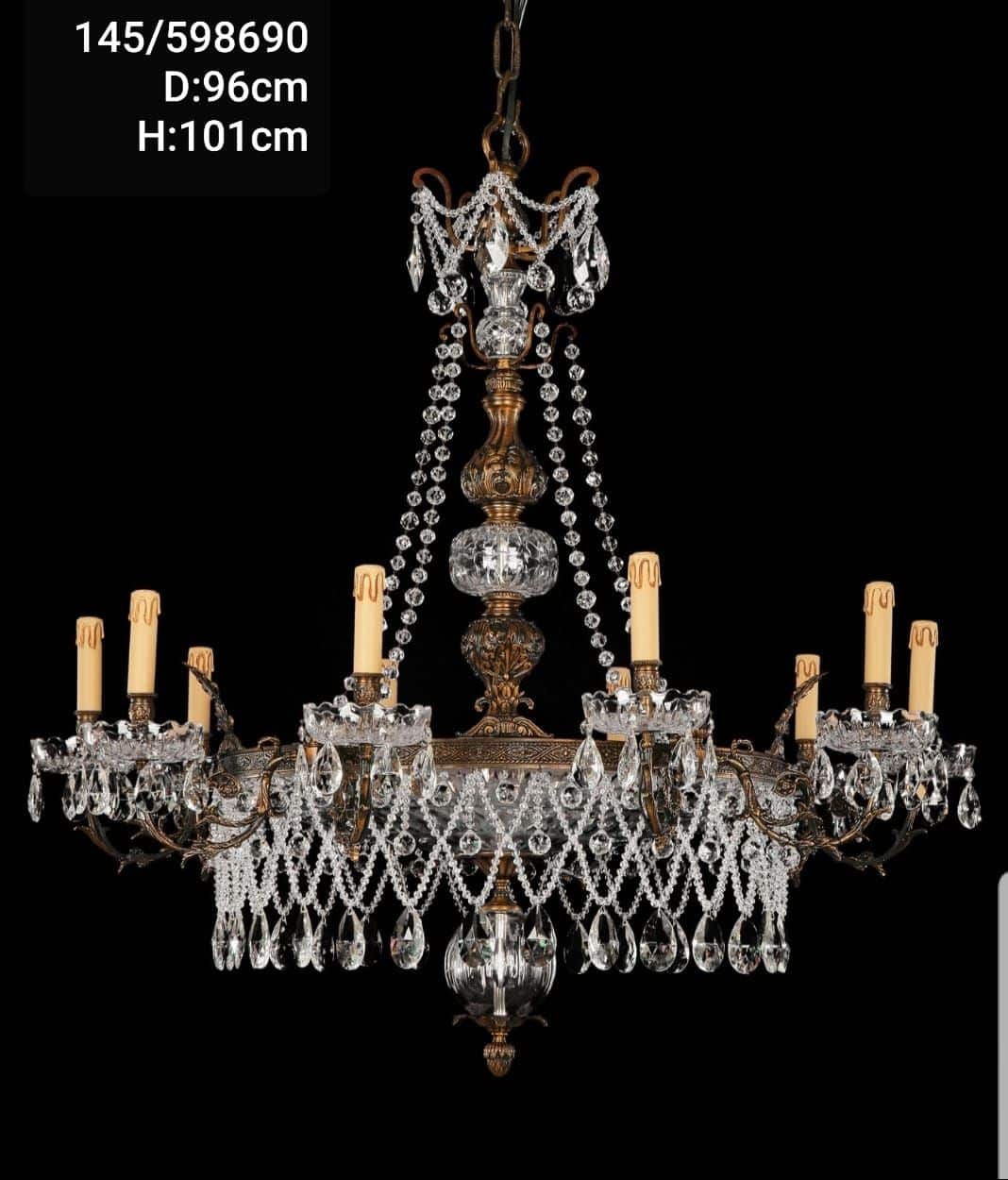
A chandelier may look like one magnificent object, but it is really a carefully connected collection of lighting components. When something becomes loose, worn, missing or simply rather tired-looking, the first challenge is often knowing what the part is called.
Is it a candle sleeve, a bobeche, a lampholder or a candle cup? More importantly, what should you replace first?
Whether you are a lighting manufacturer, professional restorer, interior designer or homeowner tackling a cherished fitting, this guide will help you identify the seven principal parts of a chandelier, understand what each one does and decide whether you need a like-for-like replacement or a bespoke solution.
Safety first: If the project involves wiring, electrical connections, earthing, flickering, overheating, exposed conductors or a circuit that trips, stop and consult a qualified electrician. Decorative lighting components cannot correct an electrical fault.
What are the seven main chandelier components?
The precise construction varies between periods and manufacturers, but most chandeliers include:
- Candle tube, candle sleeve or candle cover
- Lampholder
- Bulb
- Drip pan or bobeche
- Sconce arm or candle cup
- Chain, hanging support and ceiling rose
- Shade, glass or crystal decoration
Let us peruse each one in turn.
1. What is a candle tube or candle sleeve?
A candle tube is the decorative outer component fitted around a lampholder and beneath or around a candle-style bulb. It creates the appearance of a traditional candle while concealing the less decorative mechanical parts.
You may also hear it called a candle sleeve, candle cover, chandelier candle cover or candle socket cover. In practical terms, these names usually refer to the same family of decorative lighting components.
What it does
- Conceals the lampholder body.
- Establishes the visual height and proportion of each candle.
- Contributes to the period style of the chandelier.
- Creates a cohesive finish across every arm.
How to spot wear
Look for:
- Yellowing, staining or discolouration.
- Cracks, splits or a distorted shape.
- Wobbling around the lampholder.
- Uneven heights across the chandelier.
- A finish that no longer matches the frame.
- Waxed drips or decorative details that have broken away.
Like-for-like or bespoke?
A standard replacement may be suitable if the original dimensions are common and the fitting is relatively modern. However, restoration projects frequently require bespoke, made-to-order candle sleeves, particularly where the original part is unusual, discontinued or distorted with age.
At Candle Tubes UK, we manufacture candle tubes in card, metal, glass and nylon, with options for plain, tapered, waxed and dripped finishes. We also offer the English Regency, American Regency and French GS ranges for period-inspired and restoration work.
Do not measure only the bulb thread. Measure the widest part of the lampholder assembly that the sleeve must pass over, plus the height from its seating point to the intended top edge.
For more detail, see our guide to choosing, sizing and fitting candle sleeves.

2. What is a chandelier lampholder?
The lampholder is the electrical component into which the bulb screws or fits. It is often hidden inside the candle sleeve, which is why identifying it can be slightly fiddly.
What it does
- Holds the bulb in position.
- Provides the electrical connection to the bulb.
- Connects the bulb assembly to the chandelier arm or fitting.
How to spot wear
Electrical symptoms should always be taken seriously. Stop using the chandelier and contact a qualified electrician if you notice:
- Flickering or intermittent operation.
- A loose bulb that will not seat correctly.
- Cracked, burnt or visibly damaged insulation.
- Loose components or signs of arcing.
- A fitting that trips the circuit.
Like-for-like or bespoke?
The correct replacement depends on the bulb base, mounting arrangement, physical diameter and electrical requirements. A qualified electrician should assess and replace any wiring or electrical component.
For restoration lighting parts, Candle Tubes UK supplies E10, E12-UL and E14-related options, including adjustable E14 assemblies designed around the dimensions of compatible candle tubes. Our lampholder range includes components for new designs and replacement projects.
The practical lesson is simple: do not order a candle sleeve based on the bulb code alone. The bulb code identifies the screw-base family; it does not necessarily tell you the outside diameter of the complete lampholder assembly.
3. What is the chandelier bulb or candle bulb?
The bulb is the light-producing element at the top of the candle unit. Candle-style bulbs are commonly shaped like a flame, golf ball or traditional taper, depending on the fitting.
What it does
- Produces the light.
- Completes the visible candle silhouette.
- Influences brightness, colour and atmosphere.
How to spot a problem
Replace a bulb when it has failed, flickers, has visible damage or no longer matches the other bulbs. Always follow the bulb manufacturer’s specifications and the requirements of the fitting.
Like-for-like or bespoke?
Bulbs are generally a like-for-like replacement, provided the cap type, voltage, size and application are correct. The three codes most often encountered in this type of work are:
| Code | Common description | Typical use |
|---|---|---|
| E10 | MES, miniature screw | Slim French-style and miniature fittings |
| E12-UL | North American candelabra base | US and UL-oriented fittings |
| E14 | SES, small Edison screw | UK and European chandeliers and decorative lights |
These are not interchangeable simply because they look similar. Match the bulb to the lampholder and check the fitting’s regional and electrical requirements.
For the French GS Range, we recommend the E10 miniature SES Flame Tipped Bulb as the pairing, subject to confirming compatibility with the specific fitting.

4. What is a drip pan or bobeche?
A bobeche is the small cup, dish or tray positioned beneath a candle-style bulb. “Drip pan” is a useful plain-English description because historical versions were intended to catch wax drips from real candles.
What it does
- Sits beneath the candle unit.
- Adds a decorative transition between the arm and sleeve.
- May support hanging crystals or small decorative drops.
- Protects the arm visually from wax-style detailing.
How to spot wear
Inspect for:
- Cracks, chips or sharp edges.
- Missing crystal hooks.
- A bobeche that tilts or no longer seats correctly.
- A finish that has tarnished or no longer matches the chandelier.
Like-for-like or bespoke?
Glass bobeches and unusual period parts are often best replaced like-for-like. If the shape is discontinued or the dimensions are irregular, a restoration specialist may need to source, reproduce or adapt the component.
Take care when handling glass: a nasty pinch or sudden breakage is easily avoided with a stable working platform and sensible protection.
5. What are the sconce arms and candle cups?
The chandelier’s arms are the branching structural elements extending from its central body. A candle cup is the small raised support or socket surround at the end of an arm.
What they do
- Carry the candle unit and bobeche.
- Distribute the chandelier’s visual balance.
- Connect the decorative lighting components to the central frame.
How to spot wear
Look for:
- Bent or cracked arms.
- Loose joints.
- Distorted candle cups.
- Uneven arms that make the chandelier appear lopsided.
- Corrosion or damage around mounting points.
Like-for-like or bespoke?
These are usually structural restoration items rather than simple replacements. A specialist may be able to repair or reproduce a missing arm, but do not attempt to straighten or modify a load-bearing part while the chandelier is installed.

6. What are the chain and ceiling rose?
The chain or hanging support links the chandelier to the ceiling. The ceiling rose, sometimes called a canopy, conceals the ceiling connection and mounting hardware.
What they do
- Support the weight of the fitting.
- Set the hanging height.
- Conceal the ceiling connection.
- Provide the visual transition between ceiling and chandelier.
How to spot wear
Check for:
- Corrosion, bent links or stretched chain.
- Loose fixings.
- A ceiling rose that no longer sits flush.
- A chandelier that tilts, swings excessively or appears poorly supported.
Like-for-like or bespoke?
A chain may be replaced like-for-like if its size, finish and load requirements are known. The ceiling rose should match the scale and finish of the fixture, but the mounting arrangement must be assessed professionally.
If the chandelier is loose or unusually heavy, do not simply tighten visible screws and hope for the best. Ask a qualified electrician or appropriate installation professional to inspect the support.
7. What are chandelier shades, glass and crystals?
Some chandeliers use fabric shades, glass shades, crystal bobeches, prisms or decorative drops. These elements may be fitted around the bulbs or suspended from the arms and frame.
What they do
- Diffuse or shape the light.
- Add sparkle, colour and movement.
- Complete the intended style of the chandelier.
How to spot wear
Look for:
- Cracked or cloudy glass.
- Chipped crystal.
- Frayed fabric.
- Missing drops or mismatched replacements.
- Shades that sit unevenly or obstruct bulb access.
Like-for-like or bespoke?
Most glass and crystal pieces are replaced like-for-like where possible. For a rare or historic fitting, matching the cut, tint, dimensions and hanging method may require specialist sourcing.
What should you replace first? A practical quick-reckoner
Use this order of priority:
- Electrical concerns: Stop using the fitting and consult a qualified electrician about wiring, damaged lampholders or earthing.
- Structural support: Check the chain, ceiling rose, mounting point, central body and arms.
- Damaged glass: Replace cracked bobeches, shades or crystals before they cause further breakage.
- Bulb compatibility: Confirm E10, E12-UL or E14 before ordering bulbs or sleeves.
- Candle sleeves: Replace worn, mismatched or distorted covers once the hardware beneath them is correct.
- Decorative finish: Consider custom colours, waxed drips, bronze, gold or other finishes as the final flourish.
In other words, repair safety and structure before refreshing appearance. Then the candle sleeves can provide the “wow” factor they deserve.
When should you choose a bespoke lighting manufacturer?
Bespoke manufacture is prudent when:
- The original part is discontinued.
- The chandelier has unusual internal diameters.
- The arms are not identical.
- You need a specific height or profile.
- The finish must match existing bronze, brass, gold or ivory.
- You are producing a new lighting range.
- You need consistent components across a large project.
Our specialised digital measurement service removes much of the guesswork. Send us an original part, even if it is worn or damaged, and we can digitally assess it before manufacturing a made-to-order replacement.
We also collaborate with a collective of specialist decorators and artists for custom finishing. For selected products, our smart WiFi range can help introduce home automation without abandoning a traditional candle-style appearance.
For a wider material comparison, read our guide to nylon, card, glass and metal candle tubes.
Frequently asked questions
What is a lamp holder on a chandelier?
A lamp holder is the supporting electrical fitting that accepts the bulb. In our primary lighting content, we refer to this component as a lampholder. If it is damaged or involved in wiring work, consult a qualified electrician.
Are E10, E12 and E14 bulbs interchangeable?
No. They are different screw-base sizes and are commonly associated with different fixture types and regions. Identify the existing bulb and lamp holder, then confirm the specification before ordering.
Can I replace only the candle sleeves?
Often, yes, provided the underlying lampholders, bulbs and supporting components are suitable. Isolate the fitting, remove the bulb and never force a sleeve into place.
How do I order a difficult restoration part?
Contact Rachel’s office on 0330 113 7842. You can discuss your measurements or ask about sending an original component for our digital measurement service.
Candle Tubes UK is the UK’s leading manufacturer of bespoke candle tubes, candle sleeves and candle covers for lamps, lights and chandeliers.
Peruse our ranges at:
Whether you are restoring a French antique, specifying English Regency details, developing a new product as a lighting manufacturer or refreshing a family chandelier, the right lighting components make the entire fitting feel considered, balanced and beautifully finished.