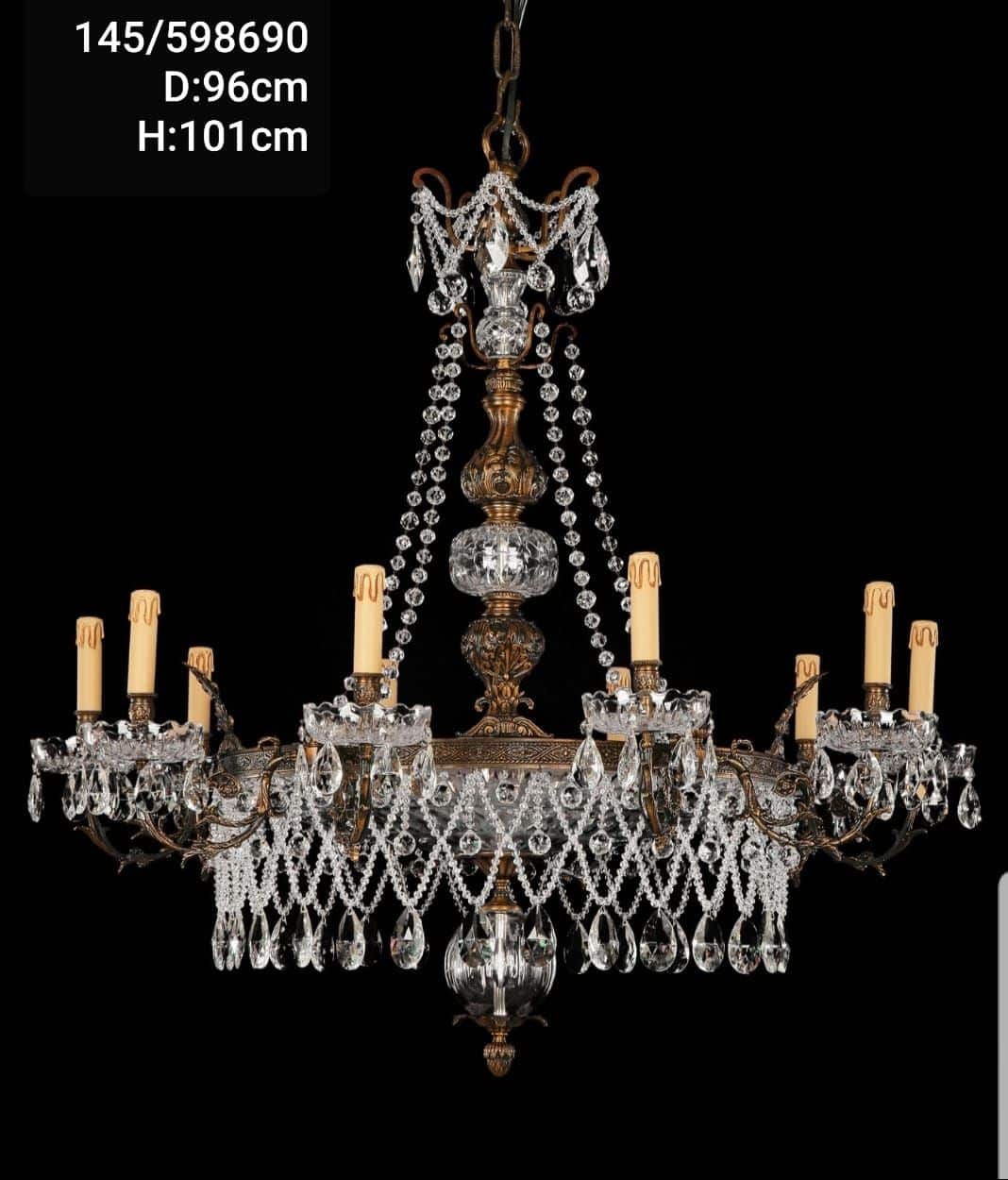
If you’ve ever stood atop a ladder, balancing precariously while trying to slide a new candle cover over a stubborn socket, only to find it’s either a “nasty pinch” too tight or wobbling like a jelly, you’ve likely encountered the Great Chandelier Conundrum: E10 versus E14.
At Candle Tubes UK, we know that these alphanumeric codes can feel like a secret language reserved for electricians and heritage restorers. But fear not! Whether you are restoring a lavish heirloom or outfitting a modern bespoke piece, understanding the difference between the dainty E10 French GS and the robust E14 English Regency is the first step toward that “wow” factor finish.
In this guide, we’ll demystify the technical specs, show you how to measure like a pro, and explain why our bespoke nylon range is the prudent choice for the modern home.
The Contenders: E10 and E14 Explained
In the world of lighting, “E” stands for Edison Screw: the threaded part of the bulb. The number following it (10 or 14) refers to the diameter of that thread in millimetres. However, when we talk about candle covers (also known as candle sleeves or socket covers), we aren’t just measuring the bulb; we are measuring the entire socket assembly that the sleeve must elegantly hide.
1. The E10 “French GS” Candle
The E10 is the petite member of the family. Often referred to in the industry as the French GS Candle, these are frequently found on smaller French-style chandeliers, delicate wall sconces, or petite decorative lamps.
- The Vibe: Slim, elegant, and understated.
- The Fit: These covers have a significantly smaller internal diameter because the underlying E10 socket is miniature.
- Best For: Fixtures where space is at a premium and you want a slender, “candle-like” profile.
2. The E14 “English Regency” Candle
The E14 is the standard European “candelabra” size and arguably the most common fitting you’ll encounter in the UK. We often call these our English Regency range because they perfectly complement the grand, sweeping arms of classic British chandeliers.
- The Vibe: Sturdy, traditional, and authoritative.
- The Fit: The socket assembly for an E14 bulb is much fatter (often around 23mm to 24mm), meaning the cover itself must be wider.
- Best For: Full-sized chandeliers and wall lights where you need a more substantial presence to match high ceilings (lucky you!) and larger fixtures.
Technical Comparison: At a Glance
| Feature | E10 (French GS) | E14 (English Regency) |
|---|---|---|
| Bulb Thread Diameter | 10mm (Miniature) | 14mm (Candelabra) |
| Typical Profile | Very Slim / Petite | Standard / Robust |
| Common Application | Small Sconces & French Antiques | Full-size Chandeliers & Lamps |
| Standard Heights | Custom (Bespoke available) | Standard & Bespoke available |
| Typical ID (Internal) | Fits ~11-13mm assemblies | Fits ~23-25mm assemblies |
(Note: Always measure your specific socket, as historical manufacturers often had their own “bespoke” ideas about sizing!)
How to Measure for a Perfect Fit
Measurement is where most DIY enthusiasts get a bit of a “nasty pinch.” To ensure your new covers slide on like a glove, you need to measure two things: the Inside Diameter (ID) and the Height.

Step 1: The Inside Diameter (The “Slide-Over” Test)
You aren’t measuring the metal screw thread of the bulb. Instead, you need to measure the widest part of the socket assembly that the tube must slide over. This often includes the plastic or ceramic insulation.
- Remove your existing bulb and old cover.
- Using a pair of calipers (or a very steady ruler), measure across the top of the socket body.
- Rule of Thumb: Your candle tube’s Inside Diameter (ID) should be roughly 0.5mm to 1mm larger than the socket’s outside diameter to allow for heat expansion and ease of fit.
Step 2: The Height (The “Eye-Line” Check)
The height of your candle tube is purely aesthetic, but there are some rules of thumb to avoid glare.
- Measure from the base (the bobeche or the arm of the chandelier) up to the point where the bulb’s glass begins.
- Top Tip: You want the tube to hide the electrical components completely but not bury the bulb so deep that it traps heat. Usually, finishing just at or slightly below the bulb’s “shoulder” (where the glass meets the metal base) looks best.

Why Choose Nylon? (Our English Regency & French GS Speciality)
While we offer plain, dripped, and waxed finishes in card, plastic, and metal, our new range of English Regency Nylon and French GS Nylon is a game-changer for restorers and designers alike.
Why Nylon?
- Durability: Unlike card, which can yellow or scorch over time, or some plastics that become brittle with heat, Nylon is incredibly resilient.
- Bespoke Precision: We can manufacture these to your exact specifications. If you have an odd-sized socket from a 1920s restoration project, we can create a made-to-order sleeve that fits perfectly.
- Finish: They provide a smooth, premium finish that can be left plain for a modern look or hand-finished by our collective of specialist decorators for that authentic antique feel.
The Candle Tubes UK Bespoke Advantage
We aren’t just “off-the-shelf” retailers. We are a lighting manufacturer specialising in the weird, the wonderful, and the “hard to find.”
Our Digital Measurement Service
Unsure of your measurements? Don’t leave it to guesswork. We offer a specialized digital measurement service. You can send us your original part (even if it’s cracked or damaged), and our team will use precision tools to ensure your new replacements are a 100% match.
Custom Finishing
Whether you want a golden antique copper finish to match a brass fixture or a clean opal acrylic look for a contemporary piece, we collaborate with artists to bring your vision to life.

Final Checklist: Before You Order
Before you peruse our range on www.candletubes.co.uk, www.candletubes.com, or www.candletubes.eu, run through this quick checklist:
- Check the Bulb: Is it an E10 (small) or E14 (standard)?
- ID vs OD: Have you measured the inside diameter needed to clear the socket?
- The “Lucky You” Ceiling Height: Are the fixtures high enough that you need longer, more dramatic sleeves?
- Material Matters: Do you want the timelessness of metal, the authenticity of wax-dripped card, or the modern durability of our Nylon range?
Restoring a chandelier is more than just maintenance; it’s about preserving the soul of a room. With the right candle covers, you can transform a dusty attic find into a lavish centerpiece.
Still confused about your E10s and E14s? Contact our expert team today. We’ve seen every socket imaginable, and we’re here to make sure your lighting restoration is absolutely brilliant.